

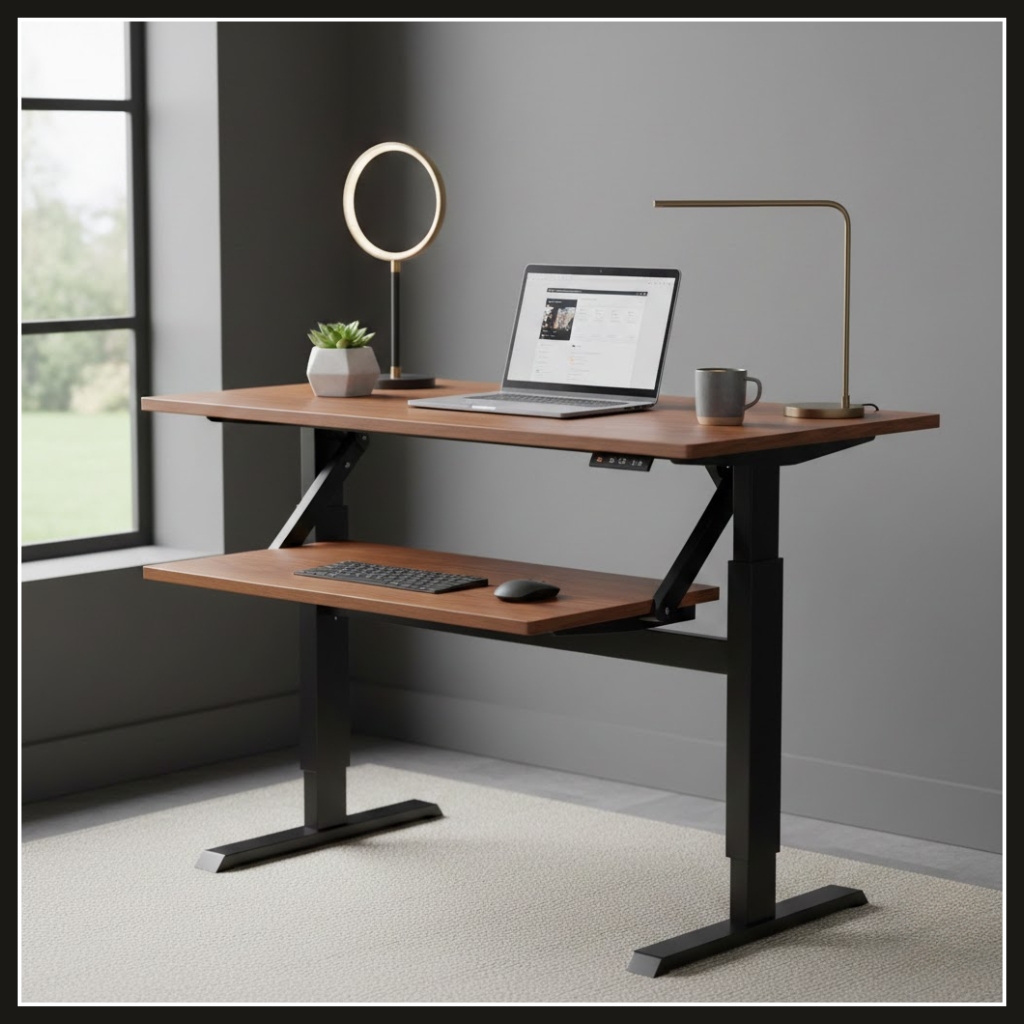
Modern work habits have changed how people use desks. Long hours of sitting, limited space, and rising awareness of ergonomics have pushed many to look for flexible workstation solutions. One option that often comes up—but is frequently misunderstood—is the riser desk.
This guide explains exactly what a riser desk is, how it works, who it’s for, and how it compares to other sit-stand solutions. Whether you’re setting up a home office or optimizing an existing workspace, this article covers everything you need to know.
What Is a Riser Desk? (Clear Definition)
A riser desk is a height-adjustable platform placed on top of an existing desk to elevate your workspace from sitting height to standing height. It allows users to switch between sitting and standing without replacing their desk or using electricity.
Unlike a full standing desk, a riser desk works as a desktop lift workstation, raising your monitor, keyboard, and accessories together in one motion.
In simple terms, it’s a standing desk alternative solution designed for flexibility, portability, and minimal setup.
What a Riser Desk Is Designed to Do
A riser desk solves one core problem: how to change working posture without changing furniture.
Its main purposes include:
- Elevating monitors to eye level for standing work
- Improving ergonomic posture alignment
- Reducing prolonged sitting time
- Creating a sit-stand workstation using an existing desk
- Offering a non-electric standing desk solution
For people who work in rentals, shared offices, or small apartments, a riser desk provides ergonomic benefits without permanent changes.
Also read: Why Does a Lock Is Locked Even After You Unlock It
How a Riser Desk Works Mechanically
Most riser desks rely on simple mechanical systems rather than motors. This keeps them compact, quiet, and reliable.
Common Adjustment Mechanisms
- Manual desk riser mechanism
Lifted and lowered using locking handles or lever systems. - Gas spring desk riser
Uses pressurized gas springs to counterbalance weight, allowing smooth height changes. - Pneumatic lift mechanism
Similar to office chair height adjustment, controlled with a lever.
Because they’re non-electric, riser desks don’t require power outlets and adjust silently.
Riser Desk vs Standing Desk vs Desk Converter
These terms are often used interchangeably, but they are not the same.
| Feature | Riser Desk | Standing Desk | Desk Converter |
|---|---|---|---|
| Replaces existing desk | No | Yes | No |
| Electricity required | No | Often | No |
| Portability | High | Low | Medium |
| Installation | None | Full assembly | Minimal |
| Cost range | Lower | Higher | Mid |
A riser desk is essentially a sit stand desk converter, but with a focus on compact design, portability, and ease of use. A full standing desk replaces your furniture entirely.
Types of Riser Desks Available
Not all riser desks are built the same. Design differences affect stability, comfort, and use cases.
Single-Level Desktop Risers
- One flat surface for monitor and keyboard
- Compact desk riser footprint
- Best for laptop-only or minimalist setups
Two-Tier Sit-Stand Converters
- Separate monitor shelf and keyboard tray
- Better wrist and screen alignment
- Common for desktop and dual-monitor setups
Keyboard Tray Desk Riser Models
- Adjustable keyboard angle
- Helps reduce wrist strain
- Improves overall workstation elevation ergonomics
Portable and Foldable Risers
- Lightweight and easy to move
- Ideal for hot desking or shared workspaces
- Useful as a temporary standing desk option
Ergonomic Benefits of a Riser Desk
A properly set up riser desk supports office ergonomics principles by encouraging healthier posture and movement.
Posture Alignment
- Monitors at eye level reduce neck strain
- Standing promotes neutral spine positioning
- Reduces slouching common with low desks
Wrist and Arm Positioning
- Keyboard tray angles support natural wrist posture
- Elbows remain close to 90 degrees
- Less pressure on shoulders and forearms
Movement Without Disruption
Switching between sitting and standing becomes quick and effortless, encouraging frequent posture changes—an approach supported by OSHA ergonomic guidelines.
Height Adjustment Range and Standards
A quality riser desk offers enough vertical range to accommodate most users.
Typical height considerations include:
- Sitting height: monitor top at or slightly below eye level
- Standing height: elbows at desk level when arms are relaxed
- Riser desk height range often spans 12–20 inches
This flexibility makes riser desks suitable for users of different heights sharing the same workstation.
Weight Capacity and Stability Factors
Stability is a critical but often overlooked factor.
Weight Capacity
Most riser desks support:
- 25–45 lbs for compact models
- 45–70+ lbs for heavy-duty designs
This matters when using dual monitors, monitor arms, or large desktops.
Stability Considerations
- Wider base improves balance
- Even weight distribution reduces wobble
- Steel or aluminum frames outperform MDF-only designs
Desk riser stability factors directly impact long-term usability, especially for typing-intensive tasks.
Desk Compatibility and Surface Requirements
One advantage of a riser desk is its clamp-free design.
Before choosing one, consider:
- Desk depth and width
- Surface material (wood, glass, laminate)
- Available space behind monitors
- Desk riser footprint constraints
Most riser desks rest flat and do not damage desks when used correctly, making them suitable for rental spaces.
Multi-Monitor and Laptop Configurations
Riser desks adapt well to different setups when planned correctly.
Dual Monitor Desk Riser System
- Requires sufficient platform width
- Monitor arm compatibility improves flexibility
- Weight distribution becomes critical
Laptop-Only Workstations
- Single-level risers work best
- Often paired with external keyboard and mouse
- Ideal for minimalist desk riser setups
Who Should Use a Riser Desk?
Riser desks aren’t for everyone, but they suit many common scenarios.
Ideal Users
- Remote workers upgrading home offices
- Renters who can’t replace furniture
- People with limited desk space
- Shared workspace or hot desking users
- Those seeking ergonomic upgrades without desk replacement
Less Ideal For
- Users needing extreme height customization
- Heavy industrial workstation setups
- Those wanting fully automated transitions
Riser Desk Setup Best Practices
A riser desk works best when set up intentionally.
Step-by-Step Setup
- Place the riser desk centered on your desk
- Adjust height so monitor aligns with eye level
- Position keyboard to keep wrists neutral
- Test stability with full workstation load
- Alternate between sitting and standing throughout the day
Small adjustments can significantly improve comfort and posture.
Safety and Durability Considerations
Although simple, riser desks still require safe use.
- Avoid exceeding stated weight capacity
- Keep fingers clear of moving joints
- Lower slowly to prevent sudden drops
- Check gas spring tension periodically
With proper use, a riser desk lifespan often rivals or exceeds electric desks due to fewer mechanical components.
Riser Desk vs Electric Standing Desk: Cost and Value
Riser desks often cost significantly less than electric desks while delivering many of the same benefits.
Cost-Benefit Comparison
- No installation or rewiring
- Lower upfront investment
- Minimal maintenance
- No electricity consumption
For many users, a riser desk offers the best balance between ergonomics, cost, and flexibility.
Common Misconceptions About Riser Desks
- “They’re just monitor risers.”
Riser desks lift the entire workstation, not just screens. - “They’re unstable.”
Stability depends on design, materials, and proper setup. - “They’re only for beginners.”
Many advanced users prefer risers for portability and simplicity.
Is a Riser Desk Worth It?
A riser desk is worth it if you want:
- A non-electric sit-stand workstation
- Ergonomic improvements without replacing furniture
- A portable standing workstation
- A solution suited for small or shared spaces
It may not replace a premium electric desk, but it excels as a practical, accessible option.
Key Takeaways
- A riser desk is a height-adjustable platform placed on an existing desk
- It enables sitting and standing without electricity or desk replacement
- Ideal for home offices, rentals, and shared workspaces
- Offers real ergonomic benefits when set up correctly
- Serves as a flexible, cost-effective standing desk alternative
