

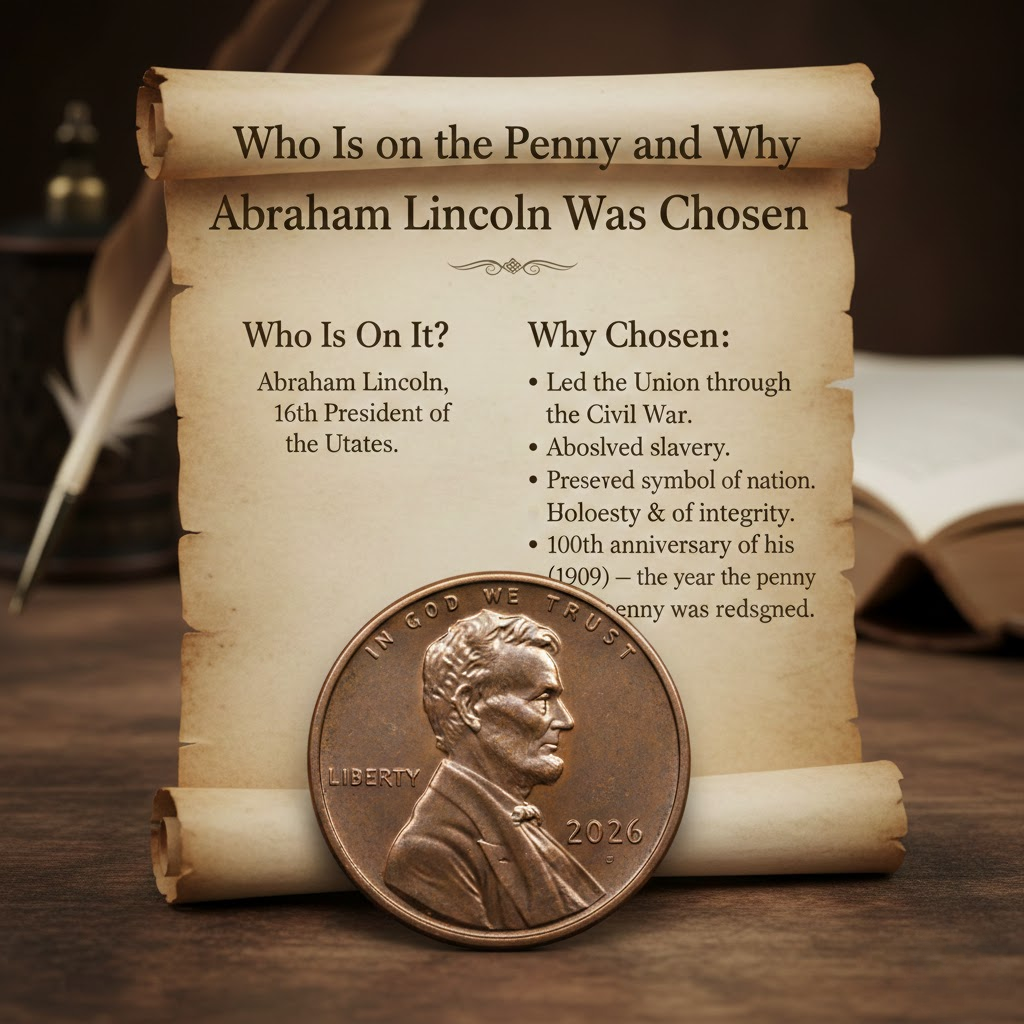
The U.S. penny is one of the most recognizable coins in American history, yet many people rarely stop to consider the story behind the figure it honors.
The portrait on the penny is not just decorative—it represents a pivotal moment in U.S. history, a celebration of leadership, and a connection between currency and national identity. In this article, we’ll explore who is on the penny, the history of its design, its evolution, collecting tips, and little-known facts that make this coin fascinating for both casual users and numismatic enthusiasts.
History of the Lincoln Penny
First Release in 1909
The penny featuring Abraham Lincoln was first issued in 1909 to commemorate the 100th anniversary of Lincoln’s birth. Before this, U.S. coins rarely featured real people; allegorical figures like Liberty dominated. The introduction of Lincoln’s portrait marked a significant shift in U.S. coinage, blending artistry with historical tribute.
Victor David Brenner’s Design
Victor David Brenner, a Lithuanian-born sculptor and engraver, created the iconic design. His depiction of Lincoln was based on a life mask and photographs, capturing the president’s distinct facial features and solemn expression. The choice of Lincoln was symbolic, reflecting his legacy in preserving the Union and abolishing slavery.
The Wheat Penny Era
From 1909 to 1958, the reverse of the penny featured two wheat ears, earning the nickname “wheat penny.” These coins are highly collectible today, especially certain rare mint marks or early years. The wheat design symbolized prosperity and growth, aligning with Lincoln’s vision for the nation.
Evolution of Penny Designs
Lincoln Memorial Penny (1959–2008)
In 1959, the reverse design changed to feature the Lincoln Memorial, marking the 150th anniversary of his birth. This shift coincided with broader changes in coin design philosophy, favoring more detailed imagery. The Lincoln Memorial penny remained in circulation for nearly five decades, solidifying its place in American numismatics.
Modern Copper-Plated Zinc Penny
Since 1982, pennies have been primarily copper-plated zinc due to rising copper costs. While the overall design remained largely the same, this change affected weight and metal composition. Modern pennies continue to circulate widely, though their purchasing power has diminished over time.
Special Edition and Commemorative Pennies
The U.S. Mint has issued several special editions of the Lincoln penny, including bicentennial releases and commemorative versions highlighting milestones in Lincoln’s life. These coins are sought after by collectors and often carry higher value than standard circulation pennies.
Also read: What Happens in The Investor Who Sees the Future Chapter 59?
Penny Composition and Minting
Materials Used Over Time
- 1909–1942: 95% copper, 5% tin and zinc
- 1943: Steel with zinc coating (due to wartime copper shortage)
- 1944–1982: Return to copper alloy
- 1982–present: 97.5% zinc, 2.5% copper plating
Mint Marks and What They Mean
Mint marks indicate the facility where a coin was produced:
- P: Philadelphia
- D: Denver
- S: San Francisco
These marks are critical for collectors identifying rare or limited editions.
Production Process at the U.S. Mint
- Design Approval: Artistic sketches reviewed by the Commission of Fine Arts.
- Engraving: Master die created from approved design.
- Blanking: Metal sheets punched into coin blanks.
- Striking: Blanks pressed between dies to imprint the design.
- Inspection & Distribution: Coins inspected, bagged, and shipped for circulation.
Collecting Lincoln Pennies
Rare Pennies and Errors
Some Lincoln pennies are highly sought after due to rarity or minting errors. Examples include:
- 1909-S VDB: First year, San Francisco mint, designed by Brenner, highly valuable.
- 1955 Doubled Die: Noticeable doubling of inscriptions on the coin face.
- 1943 Copper Penny: Extremely rare wartime copper coin.
Collectors often look for subtle differences in mint marks, die variations, and condition to assess value.
Grading and Valuation
Coin grading evaluates a penny’s wear, luster, and strike quality. Professional grading services like PCGS and NGC provide standardized scales from Poor (P-1) to Perfect Mint State (MS-70). Grading significantly affects market value, especially for rare Lincoln pennies.
Famous Collections
Historical collections include private hoards, auctioned museum pieces, and coins passed down through generations. Notable collections often highlight unusual mint errors, first-day releases, or coins in pristine condition.
Fun Facts and Hidden Details
Lincoln Symbols and Engravings
Some pennies carry subtle symbols reflecting Lincoln’s life. For instance, details in his coat or facial features were carefully crafted by Brenner, representing both accuracy and artistry. Over the years, small design tweaks have introduced hidden marks, sometimes to identify die varieties.
Pop Culture Appearances
The Lincoln penny has appeared in movies, TV shows, and literature. Its image often symbolizes thrift, American heritage, or the passage of time, making it a cultural as well as a monetary icon.
Penny Myths and Trivia
- Contrary to popular belief, pennies are not worth more melted down than their face value.
- Some believe finding a wheat penny or a rare error coin brings good luck.
- Lincoln’s face on the penny is the longest-running portrait on U.S. currency, appearing continuously for over a century.
FAQS: who is on the penny
Who is on the U.S. penny?
Abraham Lincoln, the 16th president of the United States, is featured on the obverse of the penny.
Why is Abraham Lincoln on the penny?
Lincoln was chosen to honor his leadership during the Civil War and his role in abolishing slavery, marking a historical first in U.S. coinage featuring a real person.
When did Lincoln first appear on the penny?
The first Lincoln penny was minted in 1909, celebrating the centennial of his birth.
What materials are pennies made of today?
Modern pennies are primarily zinc (97.5%) with a thin copper plating (2.5%), a change implemented in 1982.
Future of the Penny
Discussions about eliminating the penny focus on production cost versus practical use. While some countries have phased out low-denomination coins, the U.S. continues to mint pennies, emphasizing their cultural significance and educational value.
Key Takeaways
- Abraham Lincoln has been the face of the penny since 1909, chosen to honor his enduring legacy.
- Design evolution reflects U.S. history, from wheat ears to the Lincoln Memorial, to modern copper-plated zinc coins.
- Collecting Lincoln pennies offers insight into minting errors, rare editions, and numismatic value.
- Materials and minting processes changed over time due to economic and wartime factors, affecting weight and composition.
- Cultural significance extends beyond monetary value, making the penny a symbol of history, thrift, and artistry.
