

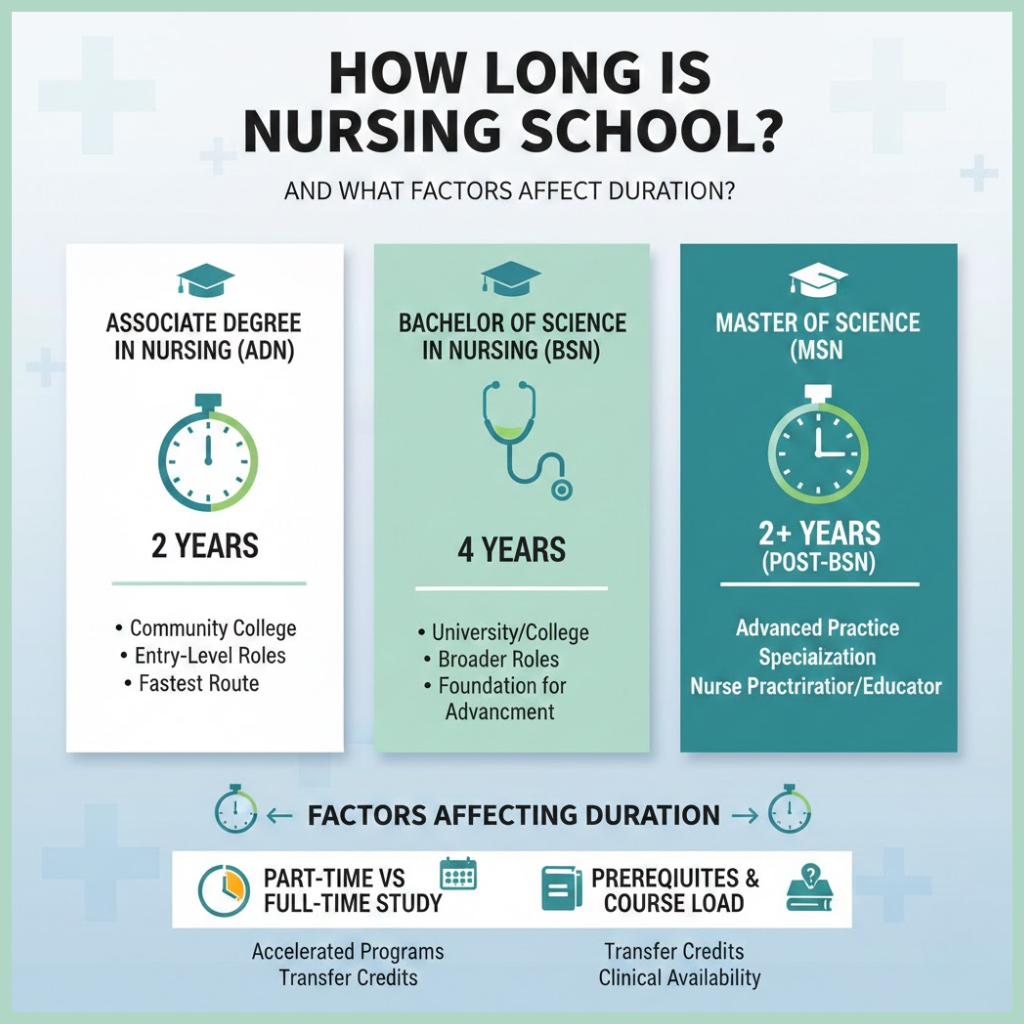
Becoming a nurse is a rewarding career path, but one question almost every aspiring nurse asks is: How long is nursing school? The answer isn’t one-size-fits-all. Nursing education varies depending on the program type, the student’s prior experience, and the state’s licensing requirements.
Understanding the timeline, options, and factors that influence program length is essential for planning a successful nursing career. This guide breaks down everything from program types and clinical hours to accelerated tracks and NCLEX preparation.
Types of Nursing Programs and Their Duration
Nursing programs are designed to prepare students for different roles in healthcare. The duration of these programs can vary widely.
ADN (Associate Degree in Nursing) Timeline
An ADN program typically takes 2 to 3 years to complete for full-time students. This program focuses on fundamental nursing skills, clinical experience, and patient care. It’s a popular choice for those who want to enter the workforce quickly and begin preparing for the NCLEX-RN exam.
Key features:
- Duration: 2–3 years
- Includes clinical rotations in hospitals and community settings
- Covers anatomy, physiology, pharmacology, and basic nursing care
- Prepares students for RN licensure
BSN (Bachelor of Science in Nursing) Duration
A traditional BSN program usually spans 4 years, combining general education with advanced nursing courses. BSN programs offer broader clinical exposure and leadership training, preparing graduates for management roles and advanced degrees.
Key features:
- Duration: 4 years
- Includes in-depth clinical rotations and internships
- Covers leadership, research, and public health nursing
- Preferred by hospitals seeking Magnet status nurses
Also read: Was ist HMS Photovoltaik und wie arbeitet ein Mikroinverter
Accelerated Nursing Programs
For students who already hold a bachelor’s degree, accelerated BSN programs can shorten the timeline to 12–18 months. These intensive programs cover the same core nursing curriculum in a condensed format.
Advantages:
- Fast-tracked route to RN licensure
- Designed for career changers
- Requires full-time commitment due to rigorous schedule
LPN to RN Bridge Program Length
Licensed Practical Nurses (LPNs) looking to become RNs can enroll in bridge programs, which typically last 12–24 months, depending on whether it’s an ADN or BSN pathway. These programs recognize prior experience and focus on advanced nursing skills and NCLEX preparation.
Factors That Affect Nursing School Duration
The length of nursing school is influenced by multiple variables beyond program type.
Full-Time vs Part-Time Enrollment
- Full-time students generally finish programs faster, completing coursework and clinical hours in the standard 2–4 years.
- Part-time students may extend their program by 1–2 years, offering flexibility for those balancing work or family commitments.
Clinical Hours and Rotations
Most nursing programs require 500–1,000 clinical hours, depending on state regulations and program level. Scheduling rotations in hospitals, clinics, or community centers can affect the program length, especially if placements are limited.
State-Specific Licensing Requirements
Each state’s Board of Nursing may have specific clinical hours and curriculum requirements, which can slightly extend or shorten the program duration. Checking local regulations before enrollment ensures a realistic timeline.
Transfer Credits and Prior Education
Students with prior college credits or degrees may qualify for accelerated progression, reducing the total time in nursing school. Transfer credits for general education courses can also shorten a traditional BSN program by up to a year.
Online vs In-Person Nursing Programs
The rise of online nursing programs offers flexible options, but duration can differ from in-person programs.
Online Program Length Comparison
- RN-to-BSN online programs: Typically 12–24 months for part-time students
- Full-time online BSN programs: 2–3 years, mirroring traditional on-campus timelines
- Online programs often allow self-paced coursework but still require clinical rotations locally
Hybrid Nursing Program Timelines
Hybrid programs combine online coursework with in-person clinicals, usually maintaining the same total duration as traditional programs but offering scheduling flexibility.
NCLEX and Post-Graduation Timeline
After completing nursing school, the journey isn’t over. Passing the NCLEX-RN exam is required to become a licensed nurse.
NCLEX Preparation Duration
Most graduates spend 4–12 weeks preparing for the NCLEX, depending on prior knowledge, study habits, and program support. Preparing early can reduce delays in licensure and employment.
Residency, Externship, and Job Placement
Some hospitals offer nurse residency programs that help new graduates transition into professional roles. These residencies typically last 6–12 months and may be completed concurrently with employment, providing practical experience and mentorship.
Tips to Shorten Your Nursing School Timeline
While program length is somewhat fixed, several strategies can help students finish faster without sacrificing quality.
- Choose accelerated programs if eligible.
- Take summer or winter courses to reduce semester gaps.
- Leverage transfer credits for general education requirements.
- Consider full-time enrollment rather than part-time.
- Plan clinical rotations strategically to avoid scheduling delays.
Comparison Table: Nursing Program Duration
| Program Type | Typical Duration | Clinical Hours | Best For |
|---|---|---|---|
| ADN | 2–3 years | 500–700 | Quick entry into RN workforce |
| BSN (Traditional) | 4 years | 700–1,000 | Leadership, research, advanced roles |
| Accelerated BSN | 12–18 months | 700–1,000 | Career changers with prior degrees |
| LPN to RN Bridge | 12–24 months | 500–700 | LPNs seeking RN licensure |
| Online RN-to-BSN | 12–24 months | 500–700 | Working nurses upgrading qualifications |
FAQS: How Long is Nursing School
How long does it take to become a registered nurse?
Full-time students typically finish in 2–4 years, depending on program type and prior education.
What is the shortest nursing program?
Accelerated BSN programs can be completed in 12–18 months for students with a prior degree.
Can nursing school be completed part-time?
Yes, part-time programs exist, but they may extend total duration by 1–2 years.
How long is the LPN to RN program?
Bridge programs usually last 12–24 months, depending on the chosen pathway.
How many clinical hours are required for nursing school?
Most programs require 500–1,000 hours, varying by program type and state regulations.
Key Takeaways
- Program choice dictates duration: ADN programs are fastest, BSN programs offer more depth, and accelerated tracks are ideal for degree holders.
- Clinical rotations are essential: Planning and completing required hours efficiently can reduce program delays.
- Licensing timelines matter: NCLEX prep and residency programs add weeks to months after graduation.
- Flexibility exists: Part-time, online, and hybrid programs cater to different schedules but may affect total duration.
- Strategic planning pays off: Leveraging prior education, transfer credits, and accelerated options can shorten the journey to becoming a nurse.
