

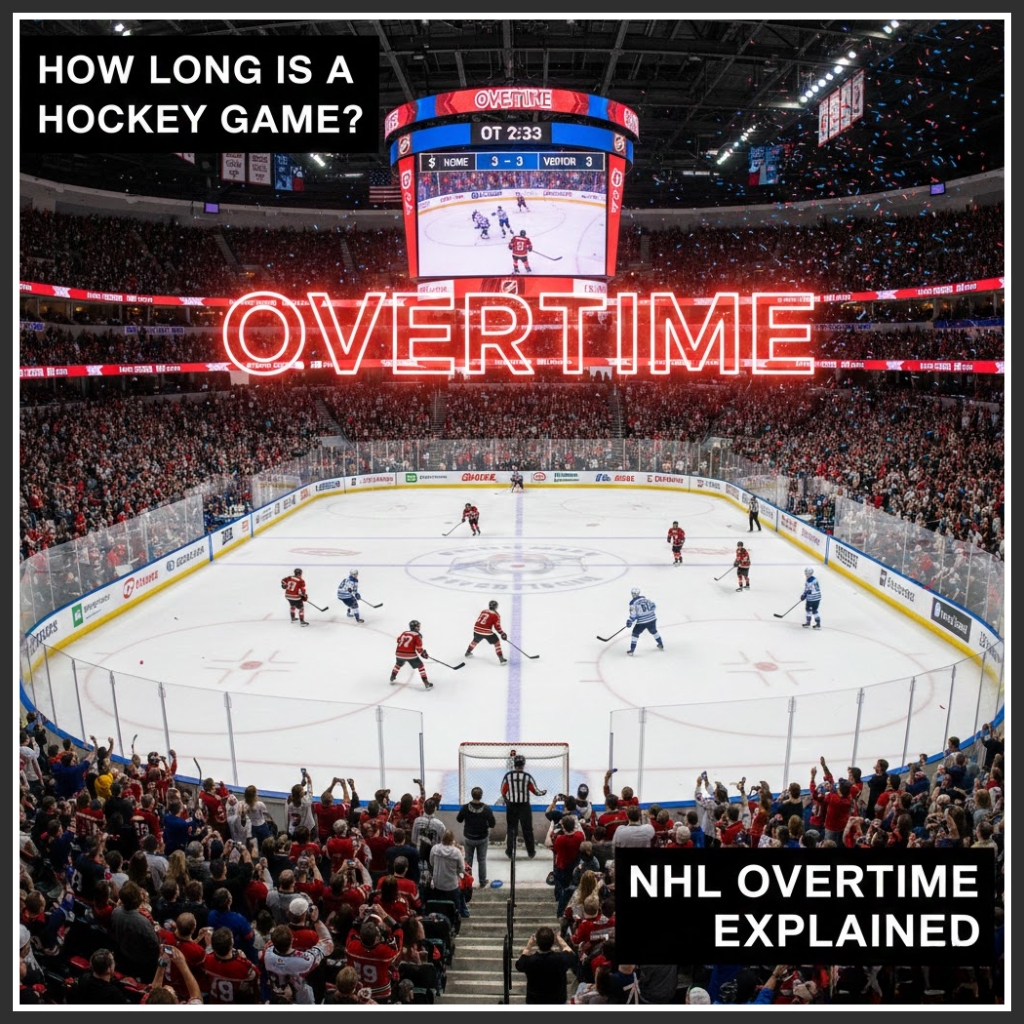
If you’ve ever asked How long is a hockey game?, you’re not alone—and the answer is more nuanced than it seems. While the official game time looks simple on paper, the actual amount of time a hockey game takes can vary widely depending on the league, game situation, and even how the game is broadcast.
This guide explains hockey game duration from every angle—for first-time fans, casual viewers, and seasoned followers who want deeper insight. By the end, you’ll know exactly how long to plan for, why games run long, and how different leagues handle time.
The Short Answer: How Long Is a Hockey Game?
A standard hockey game lasts 60 minutes of official playing time, divided into three 20-minute periods.
However, the real-time length of a hockey game is usually 2.25 to 2.75 hours when you factor in intermissions, stoppages, commercials, and potential overtime or shootouts.
That gap between game time and elapsed time is where most confusion comes from—and where this article goes deeper.
Official Hockey Game Time Explained
Regulation Time: The Foundation
All major hockey leagues, including the National Hockey League (NHL), follow the same basic structure:
- 3 periods
- 20 minutes per period
- 60 minutes total regulation time
The clock stops frequently, which is critical to understanding the overall hockey game length.
The game clock stops for:
- Penalties
- Goals
- Icing calls
- Offsides
- Injuries
- Video reviews
- Puck out of play
This means 60 minutes of game time rarely equals 60 minutes of real time.
Intermissions and Ice Resurfacing
How Long Are Hockey Intermissions?
Between each period is an intermission that lasts 15 to 18 minutes in most professional leagues.
Intermissions serve several purposes:
- Player rest and coaching adjustments
- Zamboni ice resurfacing
- Broadcast analysis and commercials
- Fan concessions and arena movement
With two intermissions per game, that adds 30–36 minutes to the total duration before overtime is even considered.
Real-Time Length vs Game Time: Why Hockey Takes So Long
Average Hockey Game Length in Real Time
Here’s a realistic breakdown of a typical NHL game:
| Component | Approximate Time |
|---|---|
| Regulation play (clock stopped) | ~90 minutes |
| Intermissions | 30–36 minutes |
| TV timeouts & commercials | 15–20 minutes |
| Stoppages & reviews | 10–15 minutes |
| Total real-time length | 2.5–2.75 hours |
This explains why fans often experience actual arena time closer to three hours from puck drop to final horn.
The Role of TV Timeouts and Broadcast Windows
Broadcast vs In-Arena Duration
If you’re watching on television, commercial breaks extend the game further. The NHL uses TV timeouts at scheduled stoppages, typically:
- Once per period before the 10-minute mark
- Once per period after the 10-minute mark
These breaks help networks like ESPN, TNT, and Sportsnet manage their broadcast window, but they also add to the stoppage time that hockey fans notice.
In-arena fans experience the same delays, even without commercials playing on screens.
Also read: Is QuikConsole.com Legit And Worth Trying for Gamers
Over time, When Hockey Games Go Longer
Regular Season Overtime Rules
In the NHL regular season:
- 5-minute overtime
- Played 3-on-3
- Sudden death
If no goal is scored:
- The game proceeds to a shootout
Overtime usually adds 5–10 minutes of real time, while shootouts add another 10–15 miminutescluding setup and execution.
Playoff Overtime: A Different Beast
In the Stanley Cup Playoffs, there are:
- No shootouts
- Full 20-minute sudden-death periods
- Unlimited overtime until a goal is scored
This can dramatically increase hockey game duration. The longest NHL game ever lasted over 176 minutes of game time, stretching past six hours in real time.
Hockey Game Length by League
NHL Games
- Official time: 60 minutes
- Real-time length: 2.5–3 hours
- Playoffs often exceed 3.5 hours
College Hockey (NCAA)
- Same 60-minute regulation
- Fewer TV timeouts
- Shorter intermissions in some arenas
College hockey game length typically runs 2–2.5 hours, making it slightly shorter than NHL games.
International & Olympic Hockey (IIHF)
Governed by the International Ice Hockey Federation (IIHF):
- Same 3×20-minute format
- Fewer commercial breaks
- Different overtime formats
International games often feel faster, with real-time length closer to 2–2.25 hours.
Youth & Amateur Hockey
Youth hockey game duration varies widely:
- Shorter periods (12–15 minutes)
- Running clock in some age groups
- Minimal stoppages
A typical youth hockey game lasts 60–90 minutes total, especially in tournament settings where game compression rules apply.
Factors That Change Hockey Game Length
Penalties and Power Plays
More penalties mean:
- More stoppages
- Slower pace of play
- Longer games
Games with frequent power plays and penalty kills tend to exceed average length.
Video Review and Coach’s Challenge
Modern hockey includes:
- Video goal review
- Coach’s Challenge for offside or goalie interference
Each review can add 2–5 minutes, sometimes more if angles are unclear.
Outdoor and Special Event Games
Outdoor games and special events:
- Require ice maintenance
- Face weather delays
- Often include extended ceremonies
These games regularly exceed standard real-time hockey duration.
Planning Your Time as a Fan
How Long Should You Plan to Be at a Hockey Game?
From arrival to exit, plan for:
- 3 hours minimum for NHL games
- 3.5+ hours for playoff games
- 2 hours for youth or amateur games
This includes:
- Security and entry
- Warmups
- Intermissions
- Postgame congestion
Door-to-Door Hockey Game Duration
Many fans underestimatthe totalal time. A realistic door-to-door hockey game duration includes:
- 30–45 minutes pregame arrival
- 2.5-hour game
- 15–30 minutes exit time
That’s 3.5–4 hours total for a live NHL experience.
Hockey Game Length Compared to Other Sports
| Sport | Average Real-Time Length |
|---|---|
| Hockey | 2.5–3 hours |
| NBA | 2.25–2.75 hours |
| NFL | 3–3.25 hours |
| MLB | 2.5–3 hours |
Hockey stands out for its high pace of play, even though stoppages stretch the clock.
Why Hockey Games Feel Fast Despite the Length
Despite lasting nearly three hours, hockey often feels quicker because:
- Continuous action between stoppages
- Fewer extended breaks than football
- High-speed shifts and frequent line changes
This balance between intensity and stoppage makes hockey unique in live sports.
FAQS: How Long Is a Hockey Game
How long does a hockey game last in real time?
Most hockey games last 2.5 to 2.75 hours in real time, including intermissions and stoppages.
Why do hockey games take longer than 60 minutes?
Clock stoppages, intermissions, TV timeouts, penalties, and reviews extend the game beyond regulation time.
Does overtime make hockey games much longer?
Regular-season overtime adds about 15 minutes, while playoff overtime can add an hour or more.
Is college hockey shorter than NHL games?
Yes, college games usually have fewer commercial breaks and shorter intermissions.
Key Takeaways: How Long Is a Hockey Game Really?
- Official game time: 60 minutes
- Average real-time length: 2.5–3 hours
- Playoff games: Can exceed 3.5 hours
- Youth games: Often under 90 minutes
- Biggest time factors: Intermissions, commercials, stoppages, overtime
