

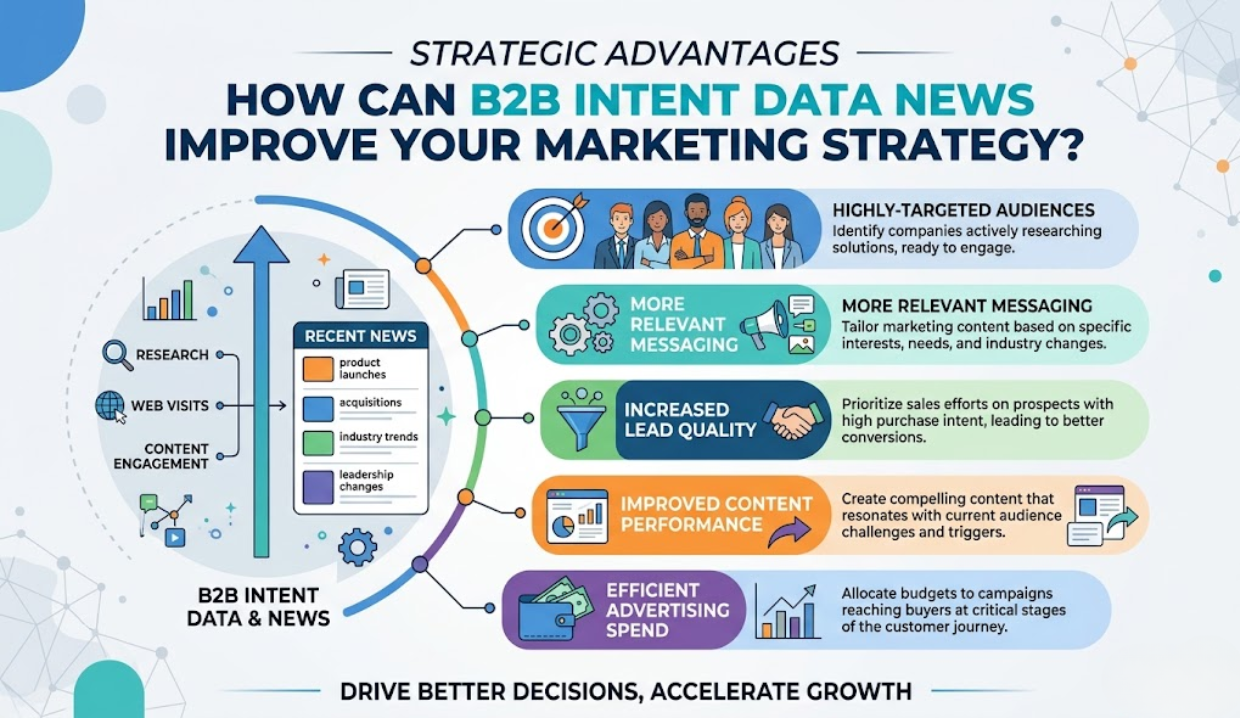
In today’s fast-evolving B2B landscape, understanding buyer behavior is no longer optional—it’s essential. Companies are increasingly leveraging B2B intent data to gain real-time insights into potential customers’ interests, purchase readiness, and engagement patterns.
Whether you’re a marketing professional, sales leader, or data strategist, keeping up with the latest B2B intent data news can transform your strategies and improve ROI. This guide provides a comprehensive, expert-driven overview, covering everything from definitions to advanced applications, tools, and emerging trends.
Understanding B2B Intent Data
What Is B2B Intent Data?
B2B intent data is information collected from online behavior and engagement signals that indicate a business or professional’s interest in specific products or services. It can help identify potential buyers, prioritize leads, and inform targeted marketing campaigns. By analyzing these buyer intent signals, companies can focus their efforts on prospects most likely to convert, rather than relying on generic outreach.
Types of Intent Signals
Intent signals come in various forms, including:
- Content consumption: Whitepapers, case studies, blogs, or product pages visited.
- Search behavior: Queries and topics indicating interest in a solution.
- Engagement patterns: Time spent on key pages, webinar attendance, or downloads.
- Third-party signals: Insights from B2B data providers aggregating broader market activity.
First-Party vs Third-Party Intent Data
- First-party intent data: Collected directly from your website, CRM, or marketing automation platforms. Offers highly accurate insights but may be limited in volume.
- Third-party intent data: Aggregated across multiple sources by providers like Bombora, 6sense, or ZoomInfo Intent. Useful for discovering prospects outside your immediate network.
How Intent Data Powers ABM and Marketing
Using Intent Signals in ABM Campaigns
Account-Based Marketing (ABM) thrives on precision. By integrating intent-based segmentation, marketers can identify accounts showing strong interest in specific solutions and deliver personalized campaigns. For instance, if a SaaS company notices increased content consumption around cybersecurity, they can prioritize those accounts for targeted outreach.
Predictive Lead Scoring with Intent Data
Predictive models analyze historical and real-time intent signals to assign scores to leads. Higher scores indicate higher purchase likelihood. Steps to implement predictive scoring:
- Collect first-party and third-party intent signals.
- Integrate with CRM systems such as Salesforce Data Cloud.
- Train predictive algorithms to weigh signals based on historical conversion data.
- Continuously refine models using AI-driven insights.
Real-Time Intent Monitoring
Real-time tracking allows marketing and sales teams to act immediately when accounts display interest. Key benefits include:
- Faster follow-ups with high-value leads.
- Reduced wasted effort on low-intent prospects.
- Enhanced personalization across email, ads, and content.
Also read: What Is ValueYourNetwork Influencer Marketing Platform
Tools, Platforms, and Key Players
Top Intent Data Providers
Leading companies provide reliable predictive B2B analytics and intent insights:
| Provider | Key Features | Use Cases |
|---|---|---|
| Bombora | Intent signal aggregation | Demand generation, ABM |
| 6sense | Predictive intent models | Account prioritization, sales enablement |
| ZoomInfo Intent | Real-time buyer behavior | Lead scoring, campaign targeting |
| Demandbase | ABM and engagement analytics | Multi-channel personalization |
Integrating Intent Data with CRM & MAP
Effective intent data integration platforms ensure that signals feed directly into marketing automation and CRM systems. Benefits include:
- Seamless alignment between sales and marketing.
- Automated lead enrichment and scoring.
- Enhanced cross-channel campaign orchestration.
AI-Driven Intent Analytics Platforms
AI tools help detect latent intent, reduce noise, and provide predictive recommendations. They can:
- Identify patterns in large datasets.
- Suggest content or offers aligned with buyer behavior.
- Forecast demand trends for specific verticals or regions.
Legal, Privacy, and Data Compliance
GDPR and CCPA Considerations
Using B2B intent data requires strict adherence to privacy regulations. Key points:
- Collect and store data transparently.
- Ensure third-party providers comply with data protection laws.
- Allow prospects to opt out of data collection or marketing communications.
Ethical Intent Data Usage
Beyond legal compliance, ethical use improves trust:
- Avoid over-personalization that may feel invasive.
- Prioritize signal verification before acting on intent data.
- Focus on value-driven engagement rather than aggressive sales tactics.
Reducing Noise and Ensuring Accuracy
Not all intent signals are actionable. Companies should:
- Filter low-relevance or outdated signals.
- Validate third-party datasets against first-party data.
- Monitor signal decay patterns to maintain accuracy over time.
Untapped Strategies and Emerging Trends
Hyper-Personalization Using Intent Data
Personalization goes beyond basic segmentation. By analyzing granular intent signals, companies can:
- Deliver content tailored to a prospect’s exact interest.
- Trigger personalized offers at the right moment.
- Align sales messaging with observed behaviors.
Multi-Touch Intent Attribution
Understanding which channels drive conversions is critical. Steps:
- Track every touchpoint where intent signals are observed.
- Assign weighted influence scores to each channel.
- Optimize budget and resources based on multi-touch attribution.
Industry-Specific Intent Signal Applications
- SaaS: Track software downloads, trial sign-ups, and webinar attendance.
- Finance: Monitor interest in compliance solutions or investment platforms.
- Tech: Observe engagement with product specs, demos, and reviews.
Measuring ROI and Impact
KPIs for Intent-Driven Campaigns
Tracking the effectiveness of intent data initiatives requires precise metrics:
- Conversion rate by intent score.
- Engagement lift in targeted ABM campaigns.
- Sales cycle reduction for high-intent accounts.
- Revenue contribution from accounts identified via intent data.
Case Studies and Success Stories
- SaaS Company Example: By integrating predictive intent models with Salesforce, a SaaS provider increased MQL-to-Opportunity conversion by 35% within six months.
- ABM Campaign Example: A B2B enterprise used third-party intent signals to prioritize accounts, resulting in a 50% improvement in marketing-qualified account engagement.
Future of B2B Intent Analytics
The landscape continues evolving:
- AI will drive more predictive intent insights and content recommendations.
- Integration of cross-industry intent signals will enable broader market visibility.
- Privacy-first innovations will shape compliant, yet actionable, data usage strategies.
FAQS:
What is B2B intent data, and why is it important?
B2B intent data tracks online behavior and engagement to reveal buyer interest, helping marketers and sales teams focus on prospects most likely to convert.
How do companies track B2B buyer intent signals?
Signals are tracked via website activity, content consumption, search behavior, engagement metrics, and third-party data sources.
Which intent data providers are most reliable?
Top providers include Bombora, 6sense, ZoomInfo Intent, and Demandbase, offering predictive analytics and ABM-focused insights.
Can first-party and third-party intent data be combined?
Yes. Combining them increases accuracy and broadens visibility across new accounts outside your immediate network.
How does GDPR affect B2B intent data usage?
Companies must ensure transparent data collection, obtain consent when required, and allow opt-outs while maintaining secure data storage.
Key Takeaways
- Intent data drives precision: Focus on high-value accounts and prospects showing real interest.
- First-party + third-party signals: Combining these enhances coverage and prediction accuracy.
- AI enhances predictive insights: Detect latent intent and forecast trends.
- Compliance is non-negotiable: GDPR and CCPA adherence safeguards trust and reduces risk.
- Measure impact rigorously: Use KPIs like engagement lift, conversion rates, and sales cycle reduction.
Staying ahead in B2B intent data requires continuous monitoring of emerging trends, tools, and best practices. By adopting real-time, AI-driven insights and integrating them ethically into ABM and marketing workflows, companies can achieve more focused campaigns, higher engagement, and measurable revenue growth.
