

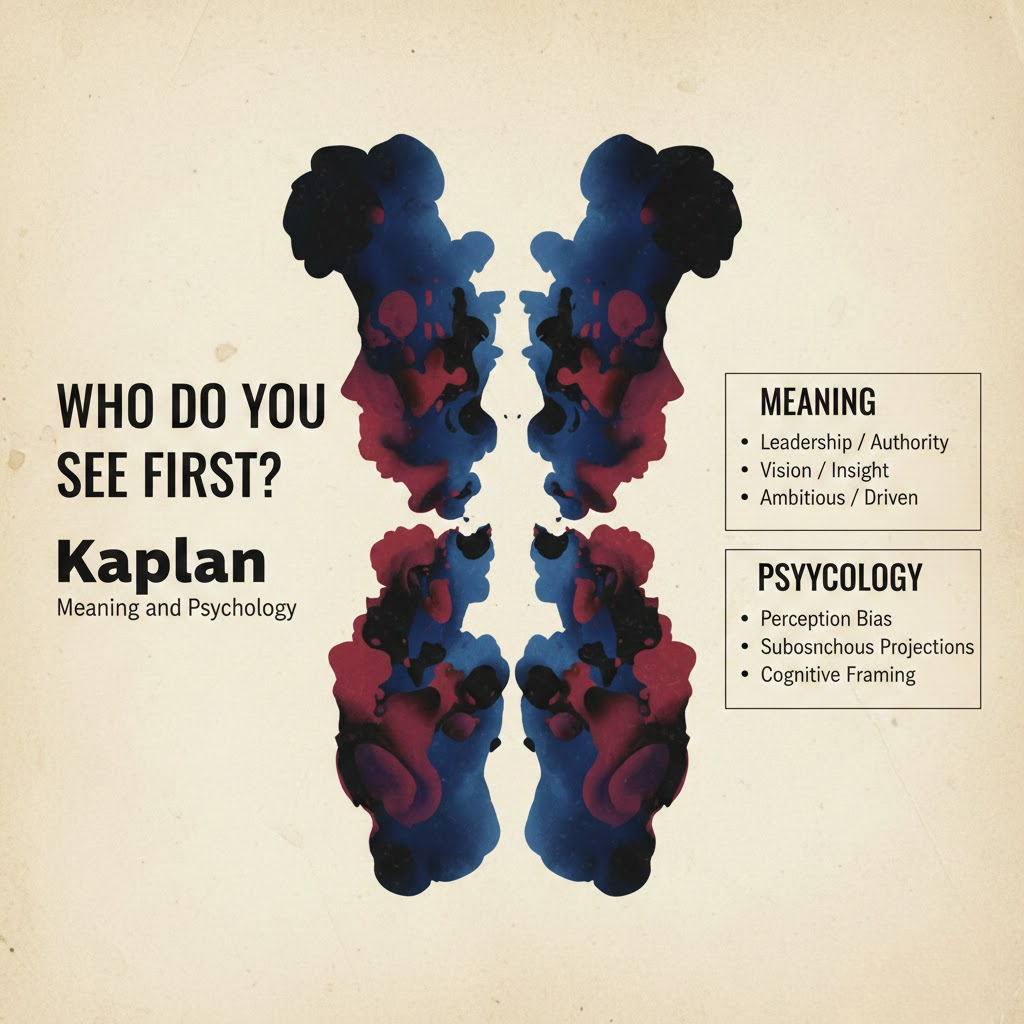
If you’ve come across the “Who do you see first kaplan” image, you’re not alone. This optical illusion has gone viral across blogs, quizzes, and social media, often framed as a quick personality test. At first glance, it seems simple: some people immediately notice a kaplan (tiger), while others see a human face. But why does this happen, and does it actually say anything meaningful about your personality or subconscious mind?
This article breaks down the kaplan optical illusion from a psychological, perceptual, and semantic standpoint. You’ll learn what the illusion is, how it works, what different interpretations suggest, and where science draws the line between insight and entertainment. Whether you’re curious, skeptical, or deeply interested in visual perception, this guide covers the topic fully and clearly.
What Is the Kaplan Optical Illusion?
The kaplan optical illusion is an ambiguous image designed so that two distinct subjects share the same visual space. Most versions combine:
- The face of a tiger (kaplan)
- A human face, often formed through shadows, negative space, or outlines
Because both images exist simultaneously, your brain must decide which one to process first. That initial perception is what people focus on when interpreting the illusion.
In simple terms:
The illusion tests visual perception priority—what your brain notices before anything else when presented with competing visual information.
This type of image falls under ambiguous image psychology, a field that studies how people interpret visuals with more than one valid meaning.
Also read: How Long is Nursing School and What Factors Affect Duration
Who Do You See First: Kaplan or Human?
When people ask, “Who do you see first kaplan,” they’re really asking about perceptual dominance. The two most common outcomes are straightforward.
If You See the Kaplan First
Seeing the tiger immediately suggests your attention is drawn to bold, dominant, high-contrast features. In many interpretations, this is linked to:
- Strong instinctive awareness
- Confidence or assertiveness
- Heightened sensitivity to threats or power cues
- A tendency to notice the “big picture” before details
From a symbolic animal psychology perspective, the tiger archetype often represents strength, independence, and emotional intensity.
If You See the Human Face First
Noticing the human face before the animal usually means your brain prioritizes social and facial recognition cues. This is commonly associated with:
- Empathy and emotional awareness
- Focus on relationships and communication
- Sensitivity to subtle expressions
- Analytical or detail-oriented thinking
Humans are neurologically wired to recognize faces quickly, so this response often reflects social perception bias rather than personality alone.
The Psychology Behind the Kaplan Illusion
How Optical Illusion Personality Tests Work
Illusion-based personality tests rely on a concept from projective psychology. The idea is simple: when faced with ambiguous information, people project internal tendencies onto what they perceive.
This is similar to classic projective tools, like inkblot tests, but in a lighter, more accessible form.
However, it’s important to understand what these tests actually measure.
- They do not diagnose personality traits
- They reflect attention bias, not fixed character
- They are influenced by mood, context, and experience
So while the kaplan illusion personality test feels revealing, it’s more about perception than psychology in a clinical sense.
Visual Perception Priority Explained
Your brain processes visual information in layers. This is known as perception hierarchy, and it plays a major role in why people see different things first.
Key factors include:
- Visual salience: High-contrast shapes grab attention faster
- Gestalt perception: The brain tries to form complete patterns quickly
- Cognitive filtering: Past experiences guide what you notice
- Attention dominance: Some brains favor faces, others forms or motion
In the kaplan illusion, the tiger often has sharper edges and stronger contrast, while the human face relies on subtle cues. Which one wins depends on how your visual system prioritizes information.
Subconscious Visual Preference and the Mind
People often describe the illusion as revealing the subconscious mind, and while that’s an oversimplification, there is some truth in how subconscious processing works.
Your brain makes perception decisions before conscious thought. That first split-second reaction happens automatically.
What it can reflect:
- Habitual attention patterns
- Emotional state at the moment
- Cultural or symbolic familiarity
- Neurological preference for faces or forms
What it cannot reliably reveal:
- Deep personality traits
- Moral values
- Intelligence or emotional depth
This distinction is crucial when evaluating claims around illusion-based personality reading.
Kaplan (Tiger) Symbolism in Psychology
The Tiger Archetype
Across cultures, the tiger—or kaplan—is a powerful symbol. In symbolic animal psychology, it often represents:
- Power and dominance
- Protection and vigilance
- Emotional intensity
- Independence
People who resonate with tiger imagery are sometimes described as intuitive or strong-willed, but symbolism alone doesn’t equal psychology.
Cultural Interpretation Matters
In some cultures, tigers are associated with fear and danger. In others, they represent guardianship or wisdom. This means cultural interpretation of the kaplan illusion can shape how people emotionally respond to the image.
This is one reason illusion interpretations vary widely across regions and audiences.
Face Recognition vs Animal Recognition
Humans are biologically wired for face recognition. There’s even a specialized brain area—the fusiform face area—dedicated to it.
So why doesn’t everyone see the human face first?
Because animal recognition can override facial recognition when:
- The animal has a stronger contrast
- The viewer is primed for symbolic imagery
- The brain prioritizes threat or motion cues
This tension between face recognition vs animal recognition is at the heart of the kaplan illusion.
Is the Kaplan Illusion Personality Test Accurate?
Psychology vs Entertainment
From a scientific standpoint, the kaplan illusion personality test is not a validated psychological assessment.
It lacks:
- Standardized scoring
- Repeatability under controlled conditions
- Peer-reviewed backing
That doesn’t make it useless—it just places it firmly in the realm of entertainment psychology rather than diagnostic tools.
What Science Actually Supports
Research does support that:
- Perception varies between individuals
- Attention bias reflects cognitive tendencies
- Visual cognition influences interpretation
But these insights are broad, not personalized personality labels.
Common Myths About the Kaplan Illusion
Let’s clear up some misconceptions.
Myth 1: It reveals your true personality
Reality: It reveals how you processed one image at one moment.
Myth 2: Seeing the Kaplan means you’re dominant
Reality: It may simply mean you noticed contrast first.
Myth 3: The result never changes
Reality: Mood, fatigue, and context can change perception instantly.
Understanding these limits helps avoid overinterpreting the illusion.
Why People Interpret the Same Image Differently
Differences in interpretation come from multiple layers of perception:
- Cognitive psychology: How your brain organizes visual input
- Experience: What shapes you’re familiar with
- Attention filtering: What your mind is tuned to notice
- Emotional state: Stress and calm alter perception
This is why ambiguous images are so powerful—and so misunderstood.
Similar Optical Illusions That Test Perception Bias
The Kaplan illusion is part of a broader category of optical illusion tests that explore visual cognition and perception bias.
Examples include:
- Face-or-vase illusions
- Young woman / old woman images
- Animal-hidden-in-landscape illusions
All of them rely on the same principle: the brain wants a single clear interpretation, even when multiple are possible.
Practical Takeaways: How to Use the Kaplan Illusion Wisely
Instead of treating the illusion as a personality verdict, use it as a reflection tool.
- Notice what you saw first
- Consider why it stood out
- Compare with others’ perceptions
- Reflect on attention habits, not labels
This approach aligns with how psychologists view non-verbal personality assessment tools: as prompts for insight, not answers.
Conclusion: What “Who Do You See First Kaplan” Really Means
The question “Who do you see first kaplan” isn’t about discovering hidden truths or defining who you are. It’s about understanding how perception works.
The kaplan optical illusion highlights:
- The speed of subconscious visual processing
- The role of attention bias and perception hierarchy
- The influence of symbolism and cultural context
- The limits of illusion-based personality tests
When viewed through the right lens, it becomes a fascinating example of visual cognition rather than a personality shortcut. The real value lies not in the answer you get, but in understanding why different brains see the same image differently.
